 Authentic. Handcrafted. India's heritage.

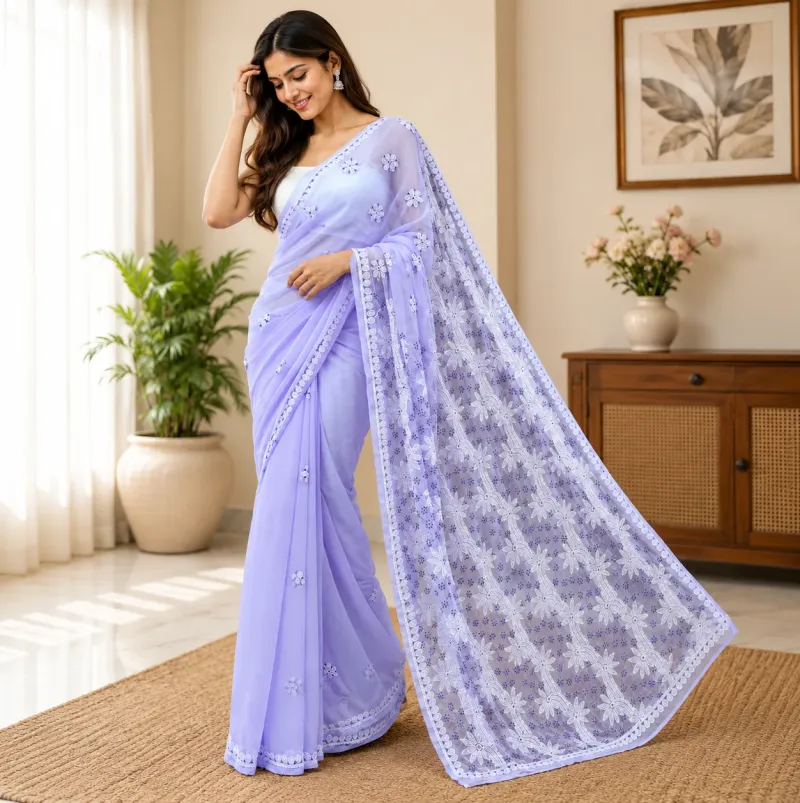
Chikankari is one of India's most loved embroideries, and that popularity has a downside: a lot of what is sold as "Lucknowi chikankari" today is machine-made. Machine embroidery is not bad in itself, but it should not be sold at hand-embroidery prices or described as handwork. This guide shows you how to tell the two apart in a few minutes, what the main stitches look like, and how to look after a hand-embroidered piece so it lasts for years.
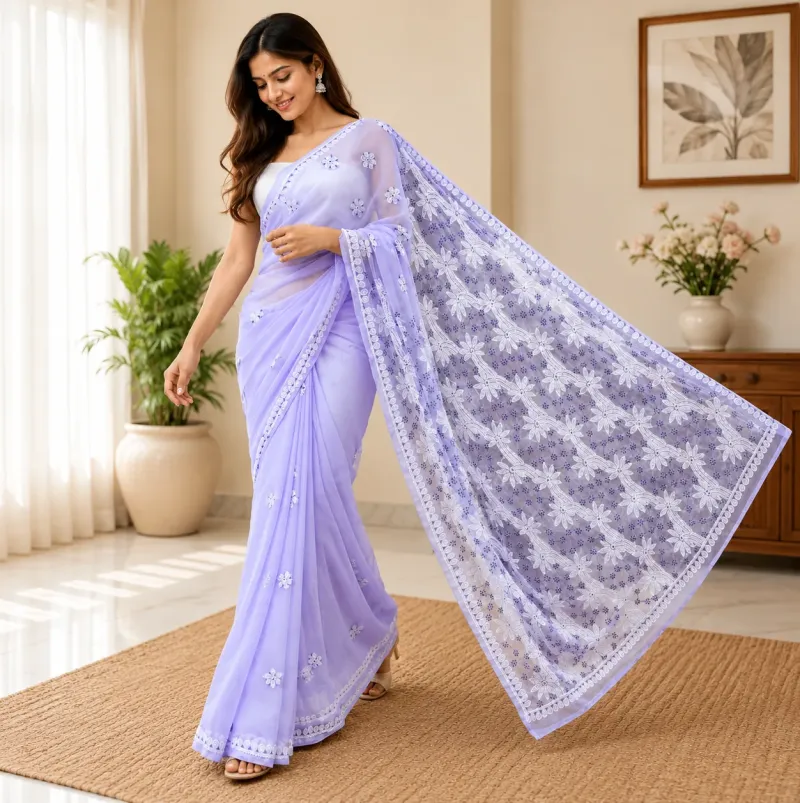
What is chikankari?
Chikankari (often shortened to chikan) is a white-on-white style of hand embroidery from Lucknow in Uttar Pradesh. It grew under Mughal patronage and is known for its soft, delicate look: fine threads worked on light fabrics like mul cotton, voile, georgette and chiffon. Lucknow chikan craft has a Geographical Indication (GI) tag, which recognises it as a traditional craft of the region.
Traditionally it was white thread on white muslin. Today you will find it in pastel and bold colours too, and often combined with mukaish (metal work), sequins or pearls for festive wear.
How hand chikankari is made
Understanding the process makes it much easier to spot a genuine piece:
- Cutting and block printing: the garment is cut, and the design is stamped onto the fabric with wooden blocks dipped in a washable ink.
- Embroidery: artisans, many of them women working from home in and around Lucknow, stitch over the printed outline by hand. A heavily worked kurta or saree can take days or even weeks.
- Washing and finishing: the piece is washed to remove the printed marks, then starched and ironed.
Every one of these steps involves human hands, which is exactly why no two hand-embroidered pieces are ever perfectly identical.
The stitches you should know
Chikankari uses a family of more than 30 stitches. You do not need to know them all, but recognising a few makes buying much easier:
| Stitch | What it looks like |
|---|---|
| Tepchi | A simple running stitch that outlines shapes and fills long lines. Often the base of lighter, everyday designs. |
| Bakhiya (shadow work) | Worked from the back of sheer fabric in a criss-cross, so from the front you see a soft, opaque "shadow" with a fine outline. One of the hardest stitches to copy by machine. |
| Phanda and Murri | Tiny knots. Phanda forms small round knots (like millet grains); murri forms rice-shaped knots, often used in flower centres. They feel raised under your fingertips. |
| Jaali | A net or lattice effect created by pulling threads apart without cutting the fabric. It looks like tiny holes in a pattern. |
| Keel kangan, Hool, Zanjeera | Smaller detailing stitches: keel kangan for petals, hool for eyelet-like centres, zanjeera for chain-like outlines. |
8 ways to tell real chikankari from machine work
1. Turn it inside out
This is the single most useful test. On a hand-embroidered piece, the back shows small knots, thread ends and slight irregularities where the artisan started and finished each section. Machine embroidery usually has a very neat back with long, continuous threads running between motifs, and sometimes a stiff mesh or backing fabric stuck behind the design.
2. Look for small irregularities
Compare two flowers or two paisleys on the same garment. In handwork they will be very similar but not identical: a petal slightly longer here, a stitch a little tighter there. Machine embroidery repeats the exact same motif with perfect, mechanical uniformity.
3. Check the shadow work on sheer fabric
Hold a georgette, chiffon or mul piece up to the light. Real bakhiya shows a soft, filled shadow from the front, with the criss-cross threads visible on the back. Machine imitations tend to look flat, satin-like or overly glossy, without that layered "shadow" depth.
4. Feel the knots
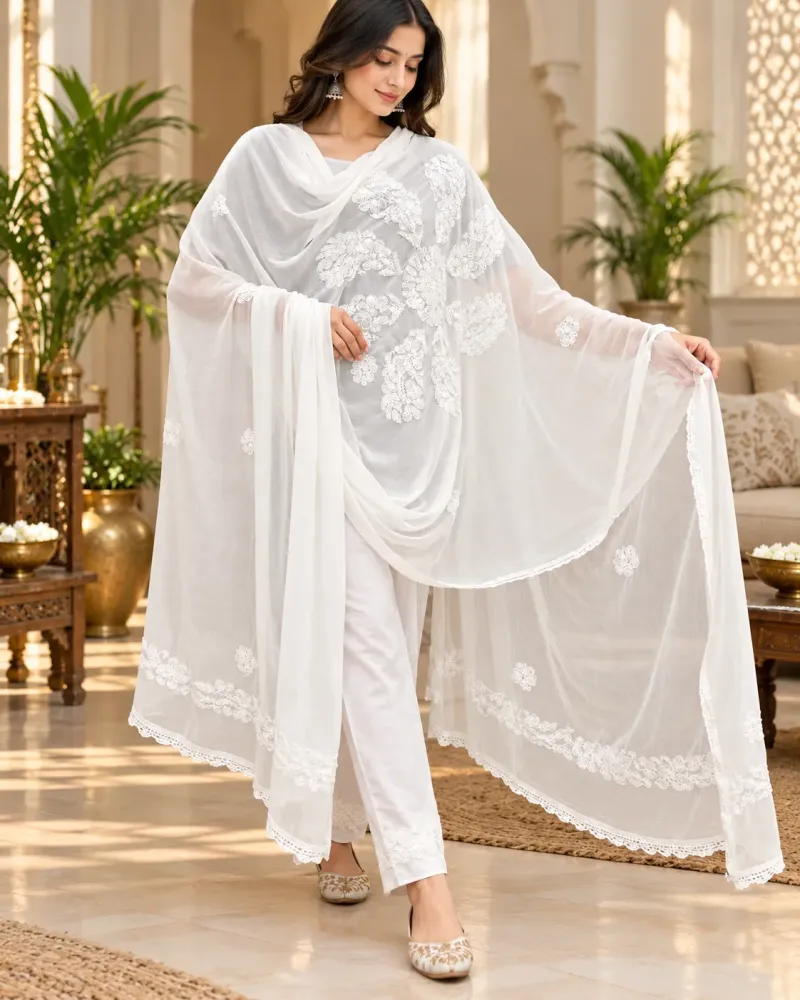
Run your fingertips over flower centres and borders. Hand-made phanda and murri knots feel raised and slightly three-dimensional. Machine "knots" are usually flat stitches that only look like knots from a distance.
5. Look closely at the edges of the design
Hand embroidery follows a printed outline, so stitches are not always perfectly on the line, and on some new pieces you may spot a faint trace of the print at an edge before the first wash. Machine embroidery sits exactly on a digital path with razor-straight edges.
6. Notice the thread and stitch length
Hand chikankari uses fine threads with stitches of slightly varying length. Machine work often uses thicker, shinier thread with identical stitch lengths and very dense filling.
7. Consider the fabric
Chikankari is at its best on light, breathable fabrics like mul cotton, voile, georgette, chiffon and organza. Heavy embroidery on a thick synthetic base is more likely to be machine-made, although fabric alone is never proof either way.
8. Think about the price and the time
A densely hand-embroidered kurta or saree can take days or weeks of an artisan's time. If a heavily worked "pure hand chikankari" piece is priced like a basic printed kurti, be cautious. Fair prices for handwork reflect the hours that went into it.
Real vs machine chikankari at a glance
| Hand chikankari | Machine embroidery | |
|---|---|---|
| Back of the fabric | Small knots and thread ends, slightly uneven | Very neat, long connecting threads, sometimes a stiff backing |
| Motifs | Similar but not identical | Exact copies of each other |
| Shadow work | Soft, layered shadow on sheer fabric | Flat or glossy fill |
| Knots | Raised, three-dimensional | Flat stitches |
| Edges | Follow the outline with small variations | Razor-straight, perfectly uniform |
| Price | Reflects days or weeks of handwork | Lower, suited to everyday budgets |
Tip for shopping online: read the product title and description. Sellers who use handwork usually say so clearly with words like "hand embroidered" or "handwork". Zoom into the product photos, and if you are unsure, ask the seller before you buy.
Chikankari with mukaish and other embellishments
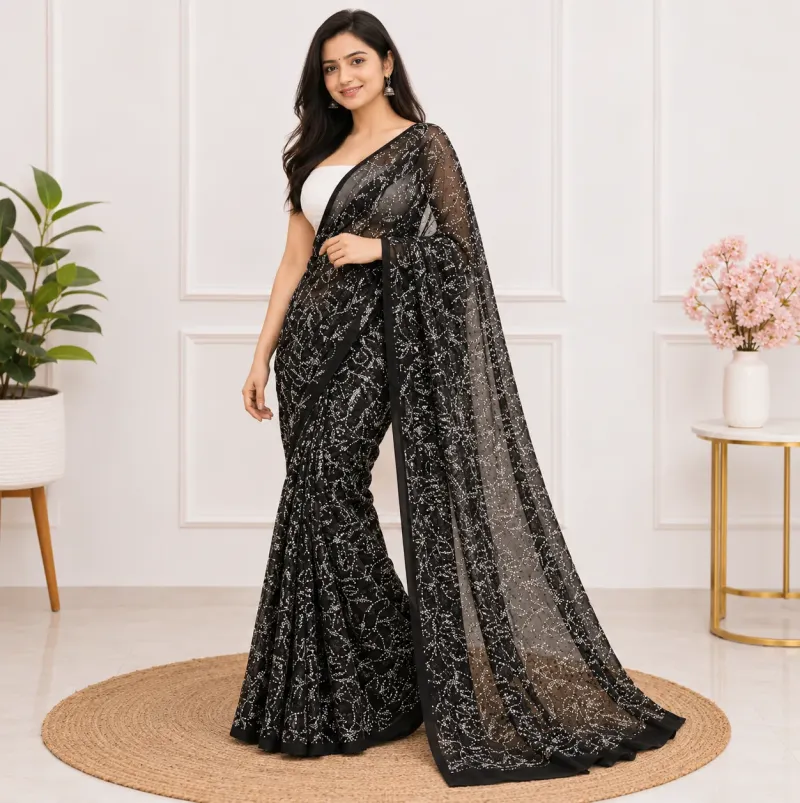
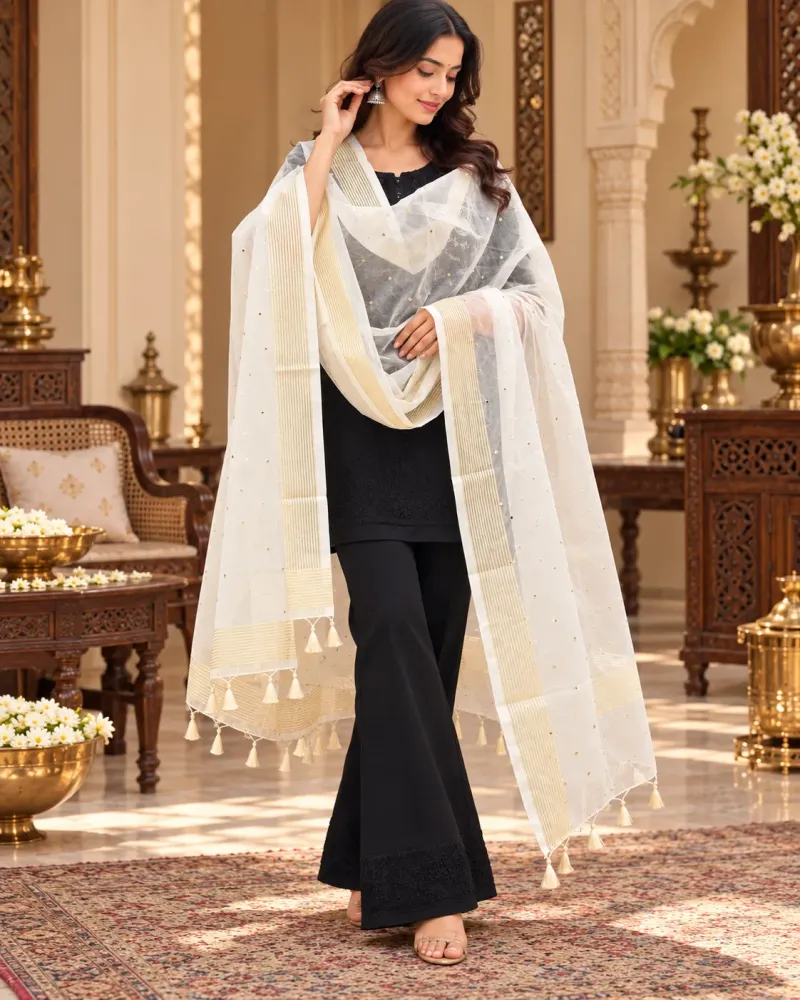
For weddings and festivals, chikankari is often paired with mukaish (also spelled mukesh): tiny strips of metal twisted into the fabric to add sparkle. You will also see sequins, pearls and beads. These add-ons are lovely for evening wear, but the same rules apply to the chikankari underneath: check the back, the knots and the motifs.
How to care for hand-embroidered chikankari
- Wash by hand in cold water with a mild liquid detergent. Do not scrub the embroidery or wring it hard.
- Wash dark and bright colours separately for the first few washes.
- No bleach, even on white pieces. It weakens the fine threads.
- Dry in the shade, flat or on a hanger, to protect colours and fabric.
- Iron on the reverse side on low to medium heat, ideally with a thin cloth on top. This keeps knots and shadow work raised.
- Store folded in a cotton or muslin cloth, away from damp. For pieces with mukaish or sequins, dry cleaning is the safest choice.
How to style chikankari
Chikankari is incredibly versatile. A few easy ideas:
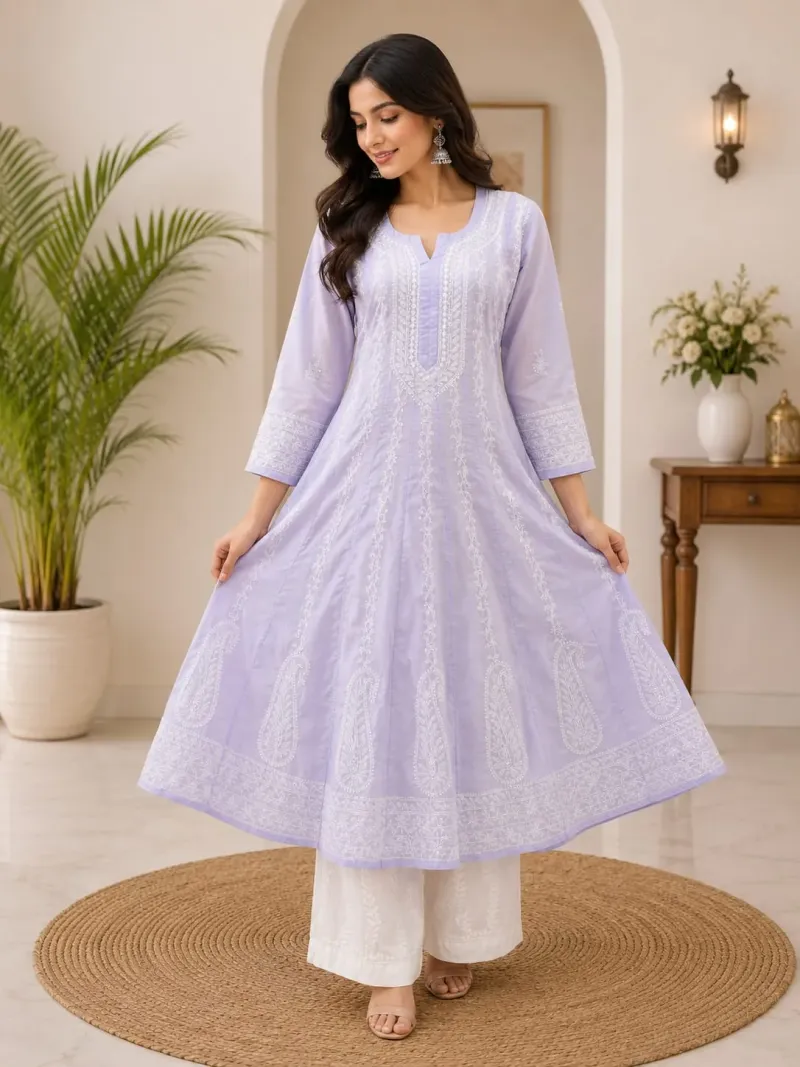
- Office and daily wear: a pastel chikankari kurti with a white chikankari palazzo and simple silver studs.
- Festive and pujas: an anarkali or kurta set with a contrast dupatta, jhumkas and juttis.
- Weddings and evenings: a georgette chikankari saree with mukaish or sequin detailing, a sleek bun and statement earrings.
- Modern and casual: a short chikankari top with jeans, or a spaghetti top layered under a sheer shrug.
Frequently asked questions
Is chikankari only white?
No. Traditional chikankari was white thread on white fabric, but today it is made in every colour, from soft pastels to black, maroon and navy, often with tone-on-tone or white threadwork.
Is machine chikankari bad?
Not at all. Machine embroidery is affordable and practical for everyday wear. The only problem is when machine work is sold as handwork. Knowing the difference simply helps you pay the right price for what you are buying.
Why does hand chikankari cost more?
Because of time and skill. A single heavily worked piece can take one artisan days or weeks, and every stitch is placed by hand. The price supports that craft and the people who keep it alive.
Will hand embroidery come loose when I wash it?
Not if you wash it gently. Hand wash in cold water, avoid wringing and scrubbing, and iron on the reverse. Well-made chikankari lasts for many years.
Shop chikankari at EthnicHaat
Now that you know what to look for, explore our collection of chikankari kurtis, sarees, palazzo sets and dupattas. Every order ships free across India with easy returns, and each product page lists the fabric and type of work so you know exactly what you are buying.