 Authentic. Handcrafted. India's heritage.

Chikankari Sarees
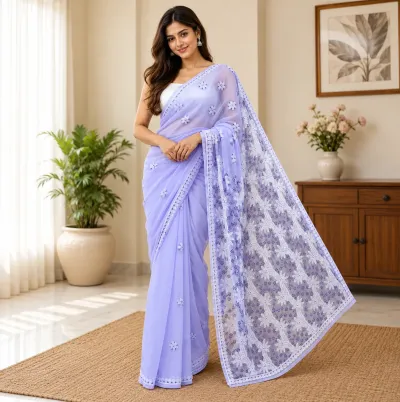
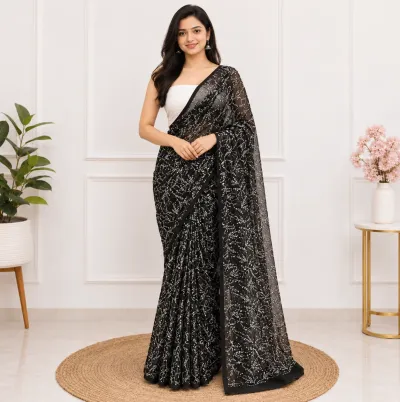
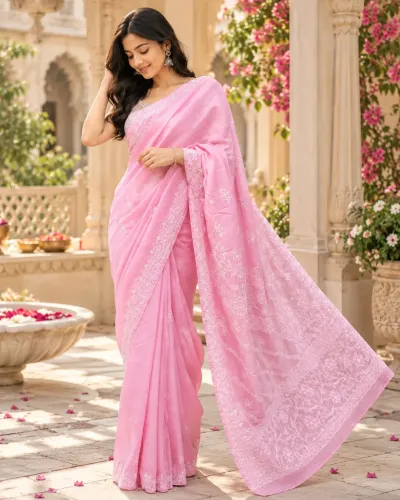
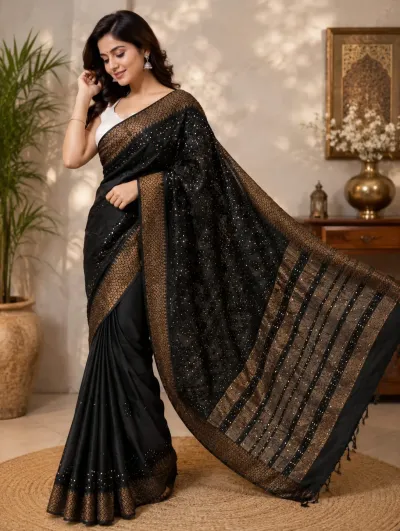
Buy Chikankari Sarees for Women Online
Discover the understated beauty of Chikankari sarees at EthnicHaat and bring delicate embroidery into one of India's most timeless silhouettes. The combination of an elegant saree drape and intricate Chikankari detailing creates a look that can feel traditional, refined and effortlessly distinctive.
From soft, lightweight sarees for daytime celebrations to more detailed embroidered drapes for weddings and festive occasions, Chikankari sarees can be styled in many different ways. Fabric, embroidery placement, border detailing, pallu design and blouse styling all influence the final look, giving you plenty of room to choose a saree that reflects your personal style.
What Makes a Chikankari Saree Stand Out?
A Chikankari saree draws attention through embroidery rather than relying only on heavy embellishment. Floral patterns, traditional motifs and delicate threadwork can be placed across the body of the saree, along the border, around the pallu or in selected panels to create different levels of detail.
This makes Chikankari especially versatile. Sarees with lighter embroidery can feel subtle and easy to style, while denser work can create a richer appearance for important celebrations.
Choose the Right Fabric for the Drape You Love
The fabric of a Chikankari saree plays an important role in how it falls, moves and feels when worn. Lightweight fabrics generally create softer drapes and can be comfortable for daytime functions, while fabrics with more body or texture can give the saree a stronger occasion-ready presence.
Depending on the collection available, shoppers may explore Chikankari sarees in fabrics such as cotton, mulmul, georgette, chiffon, Chanderi and other saree fabrics. Always check the individual product details for the exact fabric and construction before choosing.
From Delicate Motifs to Statement Jaal Work
Not every Chikankari saree has the same embroidery density. Some designs feature spaced floral or ethnic motifs that allow the base fabric to remain visible, creating a lighter look. Others may use more extensive embroidery or jaal-inspired arrangements for greater visual impact.
If you prefer subtle elegance, lighter embroidery can work beautifully for lunches, pujas and daytime gatherings. For weddings or festive evenings, more detailed work across the body, pallu or border can create a stronger statement.
The Pallu & Border Can Define the Entire Saree
In a saree, small design details can make a major difference. An embroidered pallu can become the focal point when draped over the shoulder, while scalloped, embroidered or contrasting borders can frame the saree and give the overall look more definition.
When selecting a Chikankari saree, look at how the embroidery is distributed rather than judging only by colour. A detailed pallu with a simpler body can offer a balanced look, while all-over work creates a more elaborate appearance.
Chikankari Sarees for Weddings & Festive Celebrations
Chikankari sarees can be a graceful option for engagement functions, wedding celebrations, Diwali, Eid, Durga Puja, Raksha Bandhan, family ceremonies and festive gatherings. The right combination of embroidery, fabric and accessories can make the saree feel appropriately festive without overwhelming the delicacy of the work.
For more formal occasions, choose richer detailing and style the saree with statement earrings, bangles and an elegant blouse. For smaller gatherings, lighter embroidery and understated accessories can keep the look refined.
A Graceful Choice for Day Events & Intimate Functions
One of the strengths of Chikankari sarees is that they do not need to feel overly formal. Softer colours, breathable fabrics and delicate embroidery can make them suitable for daytime weddings, festive lunches, pujas, family gatherings and cultural events.
Style these sarees with minimal jewelry, comfortable footwear and a neatly tailored blouse when you want a traditional look that remains light and easy to carry.
Style Your Chikankari Saree Around the Blouse
The blouse can completely change the personality of a Chikankari saree. A simple blouse keeps the focus on embroidered detailing, while a contrasting colour can give the outfit a more contemporary feel.
For a traditional appearance, coordinate the blouse closely with the saree and add classic jewelry. For a modern look, experiment with a contrasting blouse, cleaner accessories or a different neckline while allowing the saree embroidery to remain the hero of the outfit.
How to Choose a Chikankari Saree for Your Occasion
Start with the setting in which you plan to wear the saree. For daytime occasions, consider lighter fabrics, softer colours and moderate embroidery. For weddings and festive evenings, you may prefer denser detailing, decorative borders or a more prominent pallu.
Also consider comfort and drape. If you expect to wear the saree for several hours, choose a fabric and embroidery level that you feel comfortable carrying throughout the event.
Complete the Look Without Hiding the Embroidery
Chikankari sarees often look best when accessories support the embroidery instead of competing with it. If the saree features detailed work across the body and pallu, a pair of statement earrings or elegant bangles may be enough.
With a simpler saree, you can introduce a stronger necklace, decorative clutch or contrasting blouse. The aim is to create balance so that the craftsmanship of the saree remains clearly visible.
Discover Chikankari Sarees at EthnicHaat
Explore Chikankari sarees at EthnicHaat and find embroidered drapes suited to weddings, festivals, pujas, family functions and elegant daytime occasions. Compare fabrics, colours, embroidery patterns, borders and pallu designs to find a saree that matches both your occasion and preferred style.
Whether you favour understated embroidery or a more detailed traditional look, Chikankari sarees offer a graceful way to combine the timeless appeal of the Indian saree with distinctive embroidered craftsmanship.
Frequently Asked Questions
What is a Chikankari saree?
A Chikankari saree features Chikankari-style embroidery across selected areas or the body of the saree. The detailing may appear as floral motifs, traditional patterns, borders, pallu work or more extensive embroidered arrangements.
Which fabrics are used for Chikankari sarees?
Chikankari embroidery can appear on fabrics such as cotton, mulmul, georgette, chiffon and Chanderi, among others. Fabric availability varies by design, so check the individual product description before purchasing.
Are Chikankari sarees suitable for weddings?
Yes. Sarees with detailed embroidery, prominent borders or an elaborate pallu can be suitable for engagement functions, daytime weddings, festive ceremonies and family celebrations.
Which Chikankari saree is best for daytime functions?
Lightweight fabrics, softer colours and moderate embroidery are practical choices for daytime weddings, pujas, lunches and family gatherings.
What is the difference between light embroidery and jaal work?
Lighter embroidery generally uses individual or spaced motifs, while jaal-style embroidery creates a more continuous or densely patterned effect across a larger portion of the saree.
How should I style a Chikankari saree?
Let the level of embroidery guide your accessories. Detailed sarees usually pair well with simpler jewelry, while lighter designs give you more freedom to use statement earrings, necklaces or contrasting blouses.
Which blouse looks good with a Chikankari saree?
A coordinated blouse creates a classic appearance, while a contrasting blouse can make the saree look more contemporary. Choose the blouse according to the saree colour, embroidery and occasion.
What should I check before buying a Chikankari saree online?
Check the fabric, embroidery details, saree length, blouse-piece information, colour, border and pallu design, and any care instructions mentioned on the individual product page.